
Alaska stands in a category of its own when it comes to military service. Approximately one in ten residents has served in the armed forces, a concentration that places the state among the highest in the nation. Yet Alaska’s behavioral health system, shaped by extreme geography, limited infrastructure, and decades of underfunding, has not grown to match the need. The result is a documented gap between the size of the Veteran population and the state’s capacity to treat addiction and co-occurring mental health conditions at the level of care those veterans require.
This page compiles publicly available data from federal and state sources to document that gap. It is intended as a reference resource for researchers, journalists, veterans Service Organizations, policymakers, and clinicians. Where exact figures are available from primary sources, they are cited directly. Where research describes directional findings without a single published number, they are framed as such. No figures on this page are fabricated or estimated beyond what the underlying data supports.
71,454
Veterans in Alaska
Source: VA National Center for veterans Analysis and Statistics (NCVAS). Alaska ranks among the states with the highest veteran population as a share of total residents.
Alaska’s Veteran Population
According to the VA National Center for Service members Analysis and Statistics, approximately 71,454 veterans reside in Alaska. That figure represents roughly one in ten Alaskans, making Alaska one of the states with the highest Service member population as a percentage of total residents in the country. That ratio reflects something real about Alaska’s relationship with military service: the state has a long history of high enlistment rates, proximity to major strategic commands, and a culture that has absorbed military service as a structural part of its identity.
Geographic Distribution of Alaska’s Veterans
Alaska’s veteran population is not evenly distributed across the state. The largest concentrations are in Anchorage and the Matanuska-Susitna Valley, Fairbanks, Juneau, and the Kenai Peninsula. These are also the areas with the most accessible behavioral health infrastructure. However, significant numbers of veterans live in rural and bush communities where access to any healthcare services is severely limited by geography, cost, and availability.
Alaska’s active-duty military presence reinforces the concentration in these regions. The Joint Base Elmendorf-Richardson (JBER) in Anchorage is a combined Army and Air Force installation with more than 20,000 personnel and dependents. Fort Wainwright in Fairbanks serves as a major Army post. Eielson Air Force Base sits in the Fairbanks area. Fort Greely, near Delta Junction, rounds out the state’s major installations. Veterans who separate from service in Alaska frequently remain in the state, adding to the civilian veteran population that already exists there.
The Post-9/11 Cohort
A substantial portion of Alaska’s veteran population includes post-9/11 Veterans who served in Operation Enduring Freedom (OEF) and Operation Iraqi Freedom (OIF). This cohort carries higher rates of combat exposure, traumatic brain injury (TBI), military sexual trauma (MST), and PTSD than veterans of earlier conflicts. These conditions, as documented by the VA and the Defense and veterans Brain Injury Center, are directly associated with elevated substance use disorder risk.
Substance Use in Alaska’s Veteran Population
Substance use disorder in veterans is not a uniform problem. The substances, the patterns, and the underlying drivers differ from the civilian population in ways that require specific clinical attention. Alaska adds additional complicating factors: statewide drug trafficking patterns, extreme geographic isolation, and a behavioral health system that was not designed to serve Service members at scale.
The PTSD-SUD Connection
The VA National Center for PTSD documents that between 50 and 75 percent of veterans seeking treatment for a substance use disorder also meet the criteria for PTSD. That co-occurrence rate is substantially higher than in the general civilian population. It reflects the biological relationship between trauma and substance use: PTSD dysregulates the brain’s stress response, fear circuitry, and reward system, creating the neurological conditions that make self-medication with alcohol, opioids, and other substances feel functional. For many veterans, the substance use is not separate from the trauma. It is the coping mechanism the trauma made necessary.
Beyond combat PTSD, the post-9/11 Veteran population carries elevated rates of moral injury, TBI, and MST. Each of these conditions independently elevates substance use risk. When they appear together, as they frequently do in veterans with multiple deployments or sustained exposure to high-intensity combat environments, the risk compounds. The Defense and veterans Brain Injury Center has documented the overlap between TBI and SUD in this population, noting that cognitive changes, impulse control difficulties, and emotional dysregulation associated with TBI can directly accelerate substance use trajectories.
50–75%
of veterans seeking addiction treatment also have co-occurring PTSD
Source: VA National Center for PTSD. The co-occurrence rate among veterans is substantially higher than the general civilian population.
Alcohol
VA data identifies alcohol as the most common substance of misuse among Service members nationally. Alcohol use disorder is significantly more prevalent in veterans than in age-matched civilians. The neurological relationship between alcohol and PTSD is well documented: alcohol temporarily suppresses the hyperarousal and intrusive memory symptoms that characterize PTSD, creating a self-reinforcing cycle in which veterans drink to manage symptoms that alcohol ultimately worsens. For veterans in Alaska, long winters, high rates of seasonal affective disorder, and geographic isolation create environmental conditions that are independently associated with elevated alcohol use.
Methamphetamine
Alaska consistently ranks among the highest states in the country for methamphetamine use per capita. The Alaska High Intensity Drug Trafficking Area (HIDTA), which coordinates federal, state, and local drug enforcement efforts across the state, identifies methamphetamine as the primary drug threat facing Alaska. Interior Alaska, including the Fairbanks area and rural communities in the state’s interior, shows particularly elevated rates. The overlap between the Fairbanks area military population, the post-service veteran community in that region, and high meth availability creates conditions of concentrated risk for veterans living outside the Anchorage metro area.
Opioids and Fentanyl
Published research in the National Institutes of Health’s literature documents that veterans were prescribed opioids at substantially higher rates than civilians during the 2000s and 2010s, in part because of high rates of chronic pain associated with service-related injuries. That prescribing pattern contributed to opioid use disorder in a significant portion of the Service member population. The subsequent transition from prescription opioids to illicit fentanyl has been reflected in Alaska’s overdose mortality data: the Alaska Division of Health (formerly DHSS) has documented a sharp increase in overdose deaths involving fentanyl in recent years. CDC WONDER mortality data confirms the statewide trend.
What VA Healthcare in Alaska Offers and What It Does Not
The VA Alaska Healthcare System is the primary federal healthcare resource for enrolled veterans in the state. Its infrastructure is centered on the Anchorage VA Medical Center, which operates as an outpatient facility. Community Based Outpatient Clinics (CBOCs) extend some access to Service members in Fairbanks, Juneau, Kenai, and Wasilla. These facilities provide primary care, outpatient mental health services, substance use counseling, and telehealth services.
This network represents meaningful access for Veterans in communities along the road system who need outpatient-level care. However, it has a structural limitation that is directly relevant to this data resource: the VA Alaska Healthcare System does not operate a residential addiction treatment program.
The Community Care Pathway
Veterans who require residential-level addiction treatment are referred through the VA Community Care Program to non-VA providers. In theory, this pathway allows Veterans to receive residential care from community providers when the VA cannot provide that care locally. In practice, the pathway introduces complexity: prior authorization requirements, limited residential provider options within Alaska, and in many cases, the need for Veterans to travel out of state to access an appropriate level of care.
TriWest Healthcare Alliance administers the VA Community Care Network (VA CCN) for the West region, which includes Alaska. Prior authorization through TriWest is required for residential addiction treatment referrals. For Veterans who qualify and successfully navigate the prior authorization process, this pathway can provide access to residential care. However, the administrative burden and limited in-state residential capacity mean that many Veterans who qualify for residential treatment do not receive it in a timely manner, if at all.
The Residential Treatment Gap
SAMHSA’s American Society of Addiction Medicine (ASAM) levels of care framework establishes residential treatment (Level 3) as the appropriate standard when outpatient care is insufficient. For Veterans with co-occurring PTSD and substance use disorder, residential integrated treatment is the evidence-supported standard of care. Outpatient services alone are typically not sufficient for this population: the severity of the co-occurring conditions, the complexity of trauma-informed care, and the need for a structured, protected environment during early recovery all point toward residential care as the appropriate level of treatment.
The gap in Alaska is structural. The VA does not provide residential addiction treatment in-state. Private residential capacity in Alaska is limited, and what exists is primarily oriented toward the general population rather than Veterans specifically. Veterans who require integrated residential treatment for co-occurring PTSD and SUD must either navigate the Community Care authorization process, locate one of the few private residential programs in the state, or travel out of state for care.
One of Alaska’s Only CARF-Accredited Veteran-Specific Residential Programs
Hope Valley Health and Wellness in Wasilla is one of the very few CARF-accredited residential addiction treatment programs in Alaska built specifically for Veterans and active-duty service members. CARF accreditation requires independent third-party verification of clinical quality, evidence-based treatment practices, and measurable outcomes.
The Significance of CARF Accreditation
Not all residential programs in Alaska hold CARF accreditation from the Commission on Accreditation of Rehabilitation Facilities. CARF is the leading independent quality standard in behavioral health rehabilitation. Earning and maintaining CARF accreditation requires demonstrated compliance with standards covering evidence-based treatment, patient rights, clinical outcomes tracking, and organizational performance. It is not a self-designation. It follows a rigorous site review by an independent accrediting body.
For Veterans seeking residential treatment, accreditation matters for a concrete reason: it is objective, third-party verification that the program meets established clinical standards. For Veterans using TRICARE or navigating the VA Community Care pathway, accreditation is a recognized quality signal that supports prior authorization approval.
 Geographic Barriers Unique to Alaska
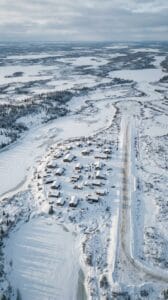
Alaska covers approximately 663,000 square miles, making it larger than the combined land area of the next three largest states. That scale is the physical backdrop for every barrier this page documents. Distance in Alaska is not the same thing as distance anywhere else in the country.
The Roadless Communities Problem
More than 300 Alaska communities are not connected to the state’s road system. They are accessible only by small aircraft or, in some cases, by boat. Veterans in communities such as Bethel, Nome, Kodiak, or Kotzebue face extreme logistical and financial barriers to accessing any behavioral health services. Reaching a Community-Based Outpatient Clinic, let alone a residential treatment program, can involve flight costs of hundreds to thousands of dollars, overnight stays in Anchorage or Fairbanks, and multi-day travel that is incompatible with maintaining employment, caregiving responsibilities, or the practical demands of daily life.
Even within the road-connected portion of Alaska, distances are substantial. Veterans in Fairbanks are approximately 360 miles from Anchorage. The Kenai Peninsula communities are 150 miles or more from the city. Juneau, the state capital, has no road connection to the rest of Alaska’s road network at all.
Seasonal and Environmental Factors
Alaska’s winters compound access barriers that are already severe. Extreme cold, road closures, reduced daylight, and the psychological weight of prolonged seasonal darkness are independently associated with elevated rates of depression, anxiety, and substance use. For Veterans already carrying trauma, the environmental factors are not incidental. They are part of the clinical picture. A Veteran in rural Interior Alaska facing seven months of winter, limited social connection, limited professional behavioral health support, and no road access to the nearest outpatient clinic is not in the same risk environment as a Veteran in a mid-sized continental city with access to outpatient services a short drive away.
Alaska Native Veterans
Alaska Native people serve in the military at high rates relative to their population. Alaska Native Veterans returning to rural and remote communities face a compounding of barriers: geographic isolation, limited healthcare infrastructure, historical trauma and intergenerational trauma associated with colonization, and a mainstream treatment system that was not designed with Alaska Native cultural values, languages, or healing frameworks in mind. The cultural disconnect between conventional addiction treatment and Alaska Native patients is a documented barrier to treatment engagement and retention.
What the Data Means
The Alaska Veteran addiction statistics documented on this page describe a structural problem, not a failure of individual will or institutional intention. Alaska’s Veterans are not underserved because the state does not care. They are underserved because the infrastructure gap is real, documented in federal and state data, and has concrete consequences.
The convergence of factors is specific: Alaska has one of the highest Veteran concentrations of any state in the country. A large portion of those Veterans, consistent with national VA data, carry co-occurring PTSD and substance use disorder that requires integrated residential care. The VA does not provide residential addiction treatment in Alaska. Private residential capacity is limited and largely not designed for Veterans. Geographic barriers ranging from roadless communities to 360-mile drives mean that even the outpatient services that do exist are not reliably accessible to the Veterans who need them most. Indigenous Veterans face additional barriers rooted in cultural disconnection and historical trauma.
Individually, each of these factors represents a challenge. Together, they create conditions in which untreated addiction and PTSD are predictable outcomes, not exceptions. The treatment gap is not theoretical. It is the lived reality of tens of thousands of Alaskans who served.
Documenting the gap is the first step toward closing it. This page will be updated as new federal and state data become available.
About This Page
This page was compiled by Hope Valley Health and Wellness using publicly available federal and state data. All sources are listed below. Hope Valley Health and Wellness is a CARF-accredited residential addiction treatment center located in Wasilla, Alaska, built specifically for Veterans and active-duty service members. Hope Valley accepts TRICARE. For questions about this resource or about treatment options, call (907) 318-2180.
Sources
- VA National Center for Veterans Analysis and Statistics (NCVAS) – Veteran population estimates by state
- VA Alaska Health Care System – Facilities, services, and Community Care information
- VA National Center for PTSD – Co-occurring PTSD and substance use disorder in Veterans
- SAMHSA National Survey on Drug Use and Health – Substance use data and ASAM levels of care framework
- Alaska Division of Behavioral Health – State-level behavioral health data and overdose reporting
- Alaska HIDTA (High Intensity Drug Trafficking Area) – Drug threat assessments and methamphetamine prevalence data
- Defense and Veterans Brain Injury Center (DVBIC) – TBI prevalence and co-occurring conditions in the military population
- CARF International – Hope Valley Health and Wellness accreditation – Independent verification of program quality standards
- CDC WONDER – Overdose mortality data by state and substance
For Veterans and Families Seeking Treatment
Hope Valley Health and Wellness accepts TRICARE and handles prior authorization, benefit verification, and travel coordination for Veterans across Alaska and the lower 48. Benefit verification is free and takes one business day.